
Singapore REITs to Buy in August 2026 continue to attract investors who want steady, recurring income, and I’m no exception. Over the years, REITs have become one of my preferred ways to build passive income because they offer stability and predictable distributions. As we move deeper into 2026, many readers have asked about the most reliable Singapore REITs to Buy in August 2026, and this article reflects how I evaluate REITs during this period.
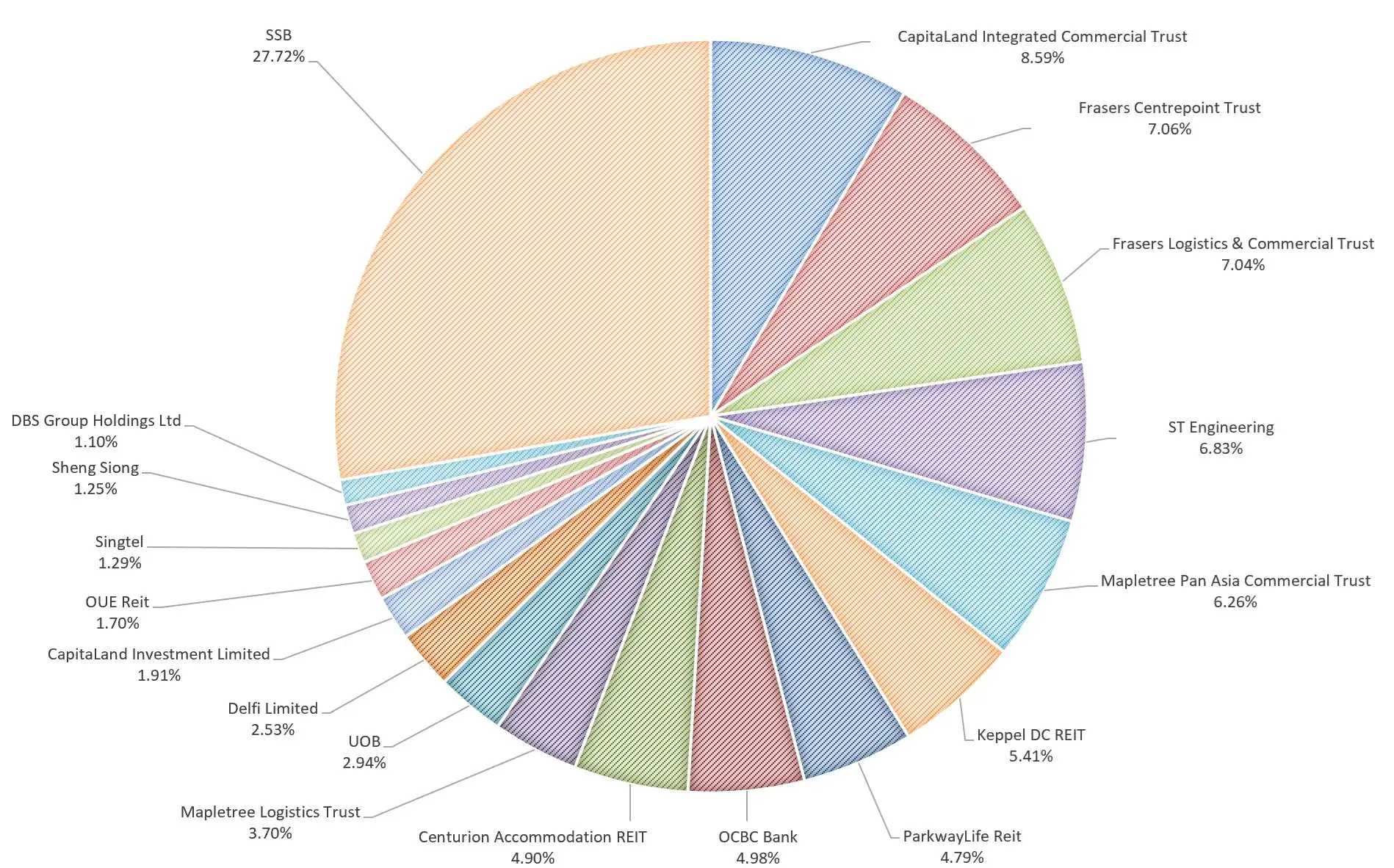
My own results reflect this. In 2025, the REITs in my portfolio paid out 20,289.89 dollars in dividends, a milestone that didn’t come from chasing trends or timing the market. This milestone was not achieved through speculation or market timing. It came from staying invested, reinvesting dividends, and focusing on quality REITs with sustainable yields.
Singapore’s REIT market is one of the most developed in Asia, offering exposure to retail malls, logistics hubs, suburban commercial centres, hospitality assets, and even data centres. Fractional ownership makes it possible for everyday investors to benefit from rental income generated by prime office towers and large-scale industrial facilities without needing significant capital.
Dividend yields are another reason REITs remain attractive. Many Singapore REITs offer between five and eight percent annually, supported by long-term leases and predictable rental income. The regulatory framework also helps. REITs must distribute at least ninety percent of taxable income, which keeps dividends flowing and makes them a reliable component of an income-focused portfolio.
Are REITs a Good Investment?
This is a question I receive frequently, especially from readers searching for Singapore REITs to Buy in August 2026. In my view, REITs can be an excellent investment for anyone who values recurring income, long-term stability, and exposure to real estate without buying physical property.
REITs are good investments for investors who want predictable cash flow, a practical way to compound wealth through reinvested dividends, and a portfolio anchored by real assets. They also tend to be more resilient than growth stocks during periods of economic uncertainty because rental income is contractual and relatively stable.
However, REITs are not designed for investors seeking fast capital gains or extremely low volatility. Rising interest rates, weaker occupancy, or higher refinancing costs can affect distributions. As with any investment, understanding the underlying assets and financial strength of each REIT is essential.
Overall, REITs are a good investment for long-term, income-focused investors who appreciate stability and are willing to stay invested through market cycles.
The 2026 REIT Landscape
Interest rates have finally begun to stabilise after several years of aggressive hikes. This shift has eased refinancing pressure and improved earnings visibility for many REITs. At the same time, geopolitical tensions such as the Iran–US conflict have created short-term volatility, but volatility often presents opportunities to accumulate strong Singapore REITs to Buy in August 2026 at more attractive valuations.
Different REIT sectors are experiencing different trends. Industrial and logistics REITs continue to benefit from e-commerce growth and supply chain diversification. Data centre REITs are supported by rising demand for cloud computing and AI infrastructure. Hospitality REITs are recovering as global travel normalises. Retail REITs with suburban exposure remain resilient thanks to stable footfall. Office REITs face hybrid-work challenges, though prime Grade A buildings still attract long-term tenants.
Understanding REIT Yield Profiles
Singapore REITs generally fall into three yield categories, and this helps narrow down Singapore REITs to Buy in August 2026.
High-yield REITs above seven percent include ESR REIT and Stoneweg EUTrust.
Mid-yield REITs in the six to seven percent range include CICT, Ascott Trust, MIT, MCT, AIMS APAC REIT and Starhill Global REIT.
Lower-yield but more stable REITs include Keppel REIT, MLT, FLCT, NTT DC REIT, FCT and Suntec REIT.
Higher yields often come with higher risk, while lower yields tend to reflect stronger balance sheets and more resilient assets.
The Power of REIT Dividends
One of the reasons I continue to invest in REITs is the compounding effect of dividends. Most REITs pay distributions quarterly or semi-annually, and reinvesting those payouts accelerates portfolio growth. Over time, the number of units increases, and so does the future dividend income. Rental escalation clauses tied to inflation also help preserve purchasing power.
How I Build a Strong REIT Portfolio
A sustainable REIT portfolio requires diversification across sectors, realistic yield expectations, monitoring of gearing and interest coverage, and identifying REITs trading below net asset value. These principles guide how I evaluate Singapore REITs to Buy in August 2026, especially when market volatility creates attractive entry points.
My REIT Screening Framework
Stock screeners make it easier to filter REITs based on dividend yield, price-to-book, gearing, market capitalisation and sector exposure. I prefer a disciplined approach: market capitalisation above one billion dollars, dividend yields between five and ten percent, and price-to-book ratios below three. This helps narrow the universe to REITs with stronger fundamentals and more sustainable payouts, especially when identifying Singapore REITs to Buy in August 2026.
Stock screening helps narrow down potential Singapore REIT opportunities by focusing on key dividend and passive income metrics such as:
- Dividend yield – to evaluate passive income potential
- Price-to-Earnings (P/E) ratio – to assess valuation
- Gearing levels – to measure financial stability and risk
- Market capitalization & sector exposure – to diversify effectively
To streamline my REIT selection process, I rely on the Stocks Café Stock Screener. It helps me filter for REITs that meet my predefined investment criteria, allowing me to focus on a curated shortlist worth deeper analysis.
Here are the key parameters I use to screen for dividend-paying REITs. Please feel free to adjust them based on your own risk tolerance and investment goals:
- Market Capitalization: ≥ S$1 billion
- Current Dividend Yield: Between 5% and 10%
- Price-to-Book Ratio: ≤ 3
This approach ensures I am targeting Singapore REITs with solid fundamentals, attractive dividend yields, and reasonable valuations, ideal for building a sustainable passive income portfolio.

Risks Every REIT Investor Should Watch
No investment is risk-free, and REITs are no exception. Rising interest rates, falling property valuations, tenant concentration, weaker rental reversions, foreign exchange exposure and yield traps are all important considerations. Looking at distribution per unit trends, occupancy, weighted average lease expiry, rental reversions and debt maturity profiles helps avoid REITs that may struggle to maintain dividends.
Why Sector Balance Matters
Industrial, retail, office, hospitality and data centre REITs each behave differently depending on economic conditions. A diversified REIT portfolio smooths income across cycles and reduces reliance on any single sector. This balance is especially important when selecting Singapore REITs to Buy in August 2026.
Interest Rates and REIT Performance
Interest rates influence borrowing costs and investor demand for yield. REITs with lower gearing, strong sponsors and longer debt maturities tend to be more resilient when rates fluctuate. These are the REITs I prefer to accumulate during uncertain periods.
Portfolio Allocation and Long-Term Planning
REITs should complement other income assets such as dividend stocks, ETFs, bonds and Treasury bills. Position sizing, rebalancing and reinvestment decisions all shape long-term outcomes. Younger investors may lean more toward growth assets, while retirees may prioritise stability and visibility of income. The right allocation depends on personal goals and risk tolerance.
Who Singapore REITs Are Best Suited For
Singapore REITs are ideal for investors who want recurring dividends, real estate exposure without owning physical property and a practical way to build passive income over time. They may be less suitable for those who need guaranteed returns or extremely low volatility. For investors seeking Singapore REITs to Buy in August 2026, understanding personal risk tolerance is essential.
Which REITs to Buy in Singapore Now?
Stoneweg EUTrust SGD (SGX: SEB)
Market Capitalization: SGD 1.3B
Current Dividend Yield: 8.48%
Price to Equity: 11.627
Price to Book: 0.741
Net Asset Value (NAV): 3.173
Closing Price (31-July-26): SGD 2.35
Stoneweg EUTrust EUR (SGX: SET)
Market Capitalization: SGD 1.3B
Current Dividend Yield: 8.42%
Price to Equity: 11.627
Price to Book: 0.741
Net Asset Value (NAV): 2.147
Closing Price (31-July-26): SGD 2.349
ESR REIT (SGX: 9A4U)
Market Capitalization: SGD 2.1B
Current Dividend Yield: 8.47%
Price to Equity: 375.789
Price to Book: 0.838
Net Asset Value (NAV): SGD 3.126
Closing Price (31-July-26): SGD 2.62
OUE REIT (SGX: TS0U)
Market Capitalization: SGD 2B
Current Dividend Yield: 7.07%
Price to Equity: 56.254
Price to Book: 0.637
Net Asset Value (NAV): SGD 0.557
Closing Price (31-July-26): SGD 0.355
Capitaland Ascott Trust (SGX: HMN)
Market Capitalization: SGD 3.5B
Current Dividend Yield: 6.75%
Price to Equity: 11.17
Price to Book: 0.71
Net Asset Value (NAV): SGD 1.274
Closing Price (31-July-26): SGD 0.905
Starhill Global REIT (SGX: P40U)
Market Capitalization: SGD 1.3B
Current Dividend Yield: 6.63%
Price to Equity: 11.775
Price to Book: 0.724
Net Asset Value (NAV): SGD 0.767
Closing Price (31-July-26): SGD 0.555
Mapletree Industrial Trust (SGX: ME8U)
Market Capitalization: SGD 5.5B
Current Dividend Yield: 6.50%
Price to Equity: 27.567
Price to Book: 1.113
Net Asset Value (NAV): SGD 1.734
Closing Price (31-July-26): SGD 1.93
Capitaland Integrated Commercial Trust (SGX: C38U)
Market Capitalization: SGD 19.6B
Current Dividend Yield: 6.25%
Price to Equity: 20.02
Price to Book: 1.152
Net Asset Value (NAV): SGD 2.162
Closing Price (31-July-26): SGD 2.49
AIMS APAC REIT (SGX: O5RU)
Market Capitalization: SGD 1.4B
Current Dividend Yield: 6.19%
Price to Equity: 12.148
Price to Book: 0.786
Net Asset Value (NAV): SGD 2.037
Closing Price (31-July-26): SGD 1.6
Lendlease REIT (SGX: JYEU)
Market Capitalization: SGD 1.9B
Current Dividend Yield: 6.19%
Price to Equity: 22.361
Price to Book: 0.724
Net Asset Value (NAV): SGD 0.815
Closing Price (31-July-26): SGD 0.59
NTT Data Centre REIT USD (SGX: NTDU)
Market Capitalization: SGD 1.2B
Current Dividend Yield: 6.04%
Price to Equity: 302.423
Price to Book: 0.946
Net Asset Value (NAV): SGD 1.255
Closing Price (31-July-26): SGD 1.185
Frasers Logistics & Commercial Trust (SGX: BUOU)
Market Capitalization: SGD 3.8B
Current Dividend Yield: 5.96%
Price to Equity: 17.649
Price to Book: 0.882
Net Asset Value (NAV): SGD 1.123
Closing Price (31-July-26): SGD 0.99
Mapletree Pan Asia Commercial Trust (SGX: N2IU)
Market Capitalization: SGD 7B
Current Dividend Yield: 5.95%
Price to Equity: 26.883
Price to Book: 0.749
Net Asset Value (NAV): SGD 1.776
Closing Price (31-July-26): SGD 1.33
Mapletree Logistics Trust (SGX: M44U)
Market Capitalization: SGD 6.3B
Current Dividend Yield: 5.86%
Price to Equity: 24.905
Price to Book: 0.898
Net Asset Value (NAV): SGD 1.38
Closing Price (31-July-26): SGD 1.24
Keppel REIT (SGX: K71U)
Market Capitalization: SGD 4.5B
Current Dividend Yield: 5.57%
Price to Equity: 8.349
Price to Book: 0.669
Net Asset Value (NAV): SGD 1.374
Closing Price (31-July-26): SGD 0.92
Far East Hospitality Trust (SGX: Q5T)
Market Capitalization: SGD 1.2B
Current Dividend Yield: 5.36%
Price to Equity: 39.818
Price to Book: 0.655
Net Asset Value (NAV): SGD 0.878
Closing Price (31-July-26): SGD 0.575
Frasers Centrepoint Trust (SGX: J69U)
Market Capitalization: SGD 4.6B
Current Dividend Yield: 5.33%
Price to Equity: 20.346
Price to Book: 0.966
Net Asset Value (NAV): SGD 2.349
Closing Price (31-July-26): SGD 2.27
Suntec REIT (SGX: T82U)
Market Capitalization: SGD 4.4B
Current Dividend Yield: 5.28%
Price to Equity: 14.157
Price to Book: 0.698
Net Asset Value (NAV): SGD 2.119
Closing Price (31-July-26): SGD 1.48