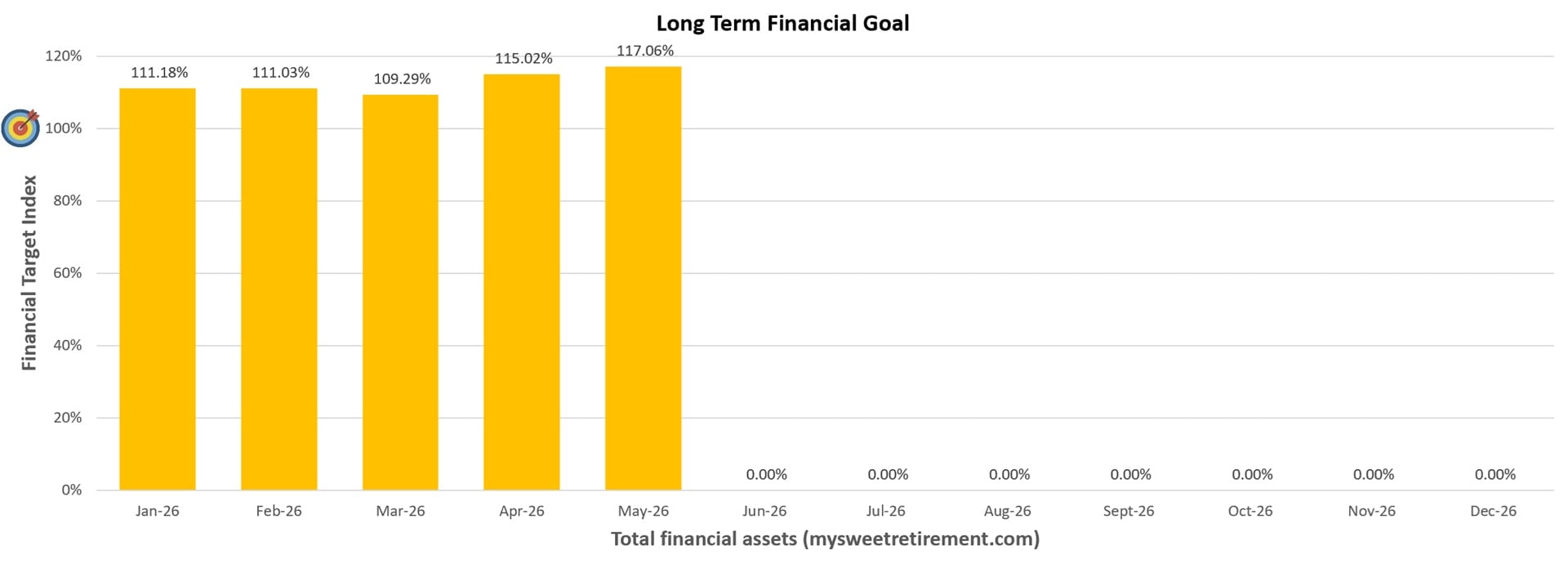
I am sharing an update on my Financial Goals Progress for May 2026. The above chart shows the total value of my financial assets expressed as a percentage of my overall financial goal. The total value of my financial assets increased by 2.05% as compared to the previous month. The increase in total value of my financial asset is mainly attributed to the total increase of my stock investments. My financial assets include insurance savings, savings accounts, fixed deposits, Singapore Savings Bonds, Singapore Treasury Bills, the current market value of my stocks, and the funds in my Supplementary Retirement Scheme (SRS) account.
In July 2025, I achieved the financial goal that I have set for myself 5 years ago. Throughout the 5 years, I have been actively investing in dividend paying stocks, buying Singapore Saving Bonds and Treasury Bills to build up my passive income. Have you set your financial goals? Financial goals are the specific targets you set to guide how you manage your money whether for short-term needs or long-term aspirations. Establishing financial goals gives you clarity, purpose, and motivation to make smarter financial choices. With clear objectives in place, you can monitor your progress, make informed decisions, and steadily build toward lasting financial stability and security. My long-term financial goal is to stash sufficient money (target) which can help me to retire early in Singapore.
How to set achievable financial goals?
Below are the actions that I did over the 5 years to achieve the financial goals.
Save 20 Percent of My Salary
GXS Bank offers a great feature that lets me create dedicated savings pockets. I have built a habit of allocating 20% of my salary into one of these pockets on the GXS Digital Bank. Every month, the moment my pay check arrives, I transfer that portion straight in. It is a simple, consistent routine that steadily grows my cash reserves and gives me a reliable financial cushion I can draw on whenever I need it in the future.
Contribute to SRS
The Supplementary Retirement Scheme (SRS) is a voluntary savings scheme in Singapore that complements the Central Provident Fund (CPF) for retirement planning. It was introduced by the government in 2001 to encourage individuals to save more for their retirement and reduce the reliance on government assistance in old age.
Most working adults recognise the value of contributing to their Supplementary Retirement Scheme (SRS) account, especially for the tax relief it provides. To stay consistent, I created a dedicated savings pocket in the GXS Digital Bank and have been transferring funds into it every month. In December 2025, I closed that pocket and moved the accumulated amount along with the interest earned into my actual SRS account to maximise my tax benefits for the year.
I invested the money in my SRS account into Singapore Treasury Bills and Singapore Savings Bond to earn a higher interest rate.
Reinvest Dividends Collected from My Dividend Stock Portfolio
If you have spent any time learning about investing, you have probably come across the idea of compounding. It is the simple but powerful mechanism where the returns you earn whether dividends, interest, or capital gains are reinvested to generate even more returns. In essence, your money begins to earn its own money, and those new earnings continue the cycle.
Given enough time, this creates a snowball effect. Each round of reinvestment increases your base, so every subsequent cycle produces larger gains than the one before. This is why compounding is often described as the eighth wonder of the world, which is quiet, steady, and capable of building significant wealth over the long run. Many investors who achieved financial independence did so by letting compounding work relentlessly in the background.
The real key to unlocking compounding’s full strength is surprisingly straightforward: start early and stay consistent. Even small, regular contributions can grow into something meaningful when given years or decades to multiply. Patience does the heavy lifting. The longer your investments are left untouched, the more dramatic the results.
I have been applying this principle since 2012. Whenever dividends from my stocks and REITs come in, I do not treat them as spending money. Instead, I accumulate and reinvest them into more dividend-paying assets. This disciplined habit has steadily expanded my portfolio and increased my passive income year after year. It is a simple approach, but over time, it has proven incredibly effective.
Side Hustle
What is a side hustle? A side hustle is a way to make extra money outside of your full-time job. It is typically a passion project or small business that you work on during your free time to bring in additional income. Side hustles can range from freelance work, selling products online, offering services, or even renting out property. Many people start side hustles to pursue their interests, build new skills, or save up for a specific goal.
In April 2025, I decided to take the plunge and started a new side hustle. If you notice, I started selling stock investments and personal finance related books on my blog. Reading stock investment and personal finance books offers a range of powerful, long-term benefits, especially if you’re serious about building wealth and making informed decisions.
Reading books on stock investment and personal finance significantly enhances your financial literacy, helping you understand key concepts like budgeting, saving, investing, and risk management. These books cultivate an investor mindset, teaching discipline and long-term thinking while improving your decision-making and helping you avoid common financial mistakes.
They encourage wealth-building habits and provide diverse strategies from seasoned investors, allowing you to find approaches that align with your goals. Ultimately, they empower you to take control of your money, build financial independence, and make informed choices that support lasting financial well-being.
My Dividend Stock Portfolio
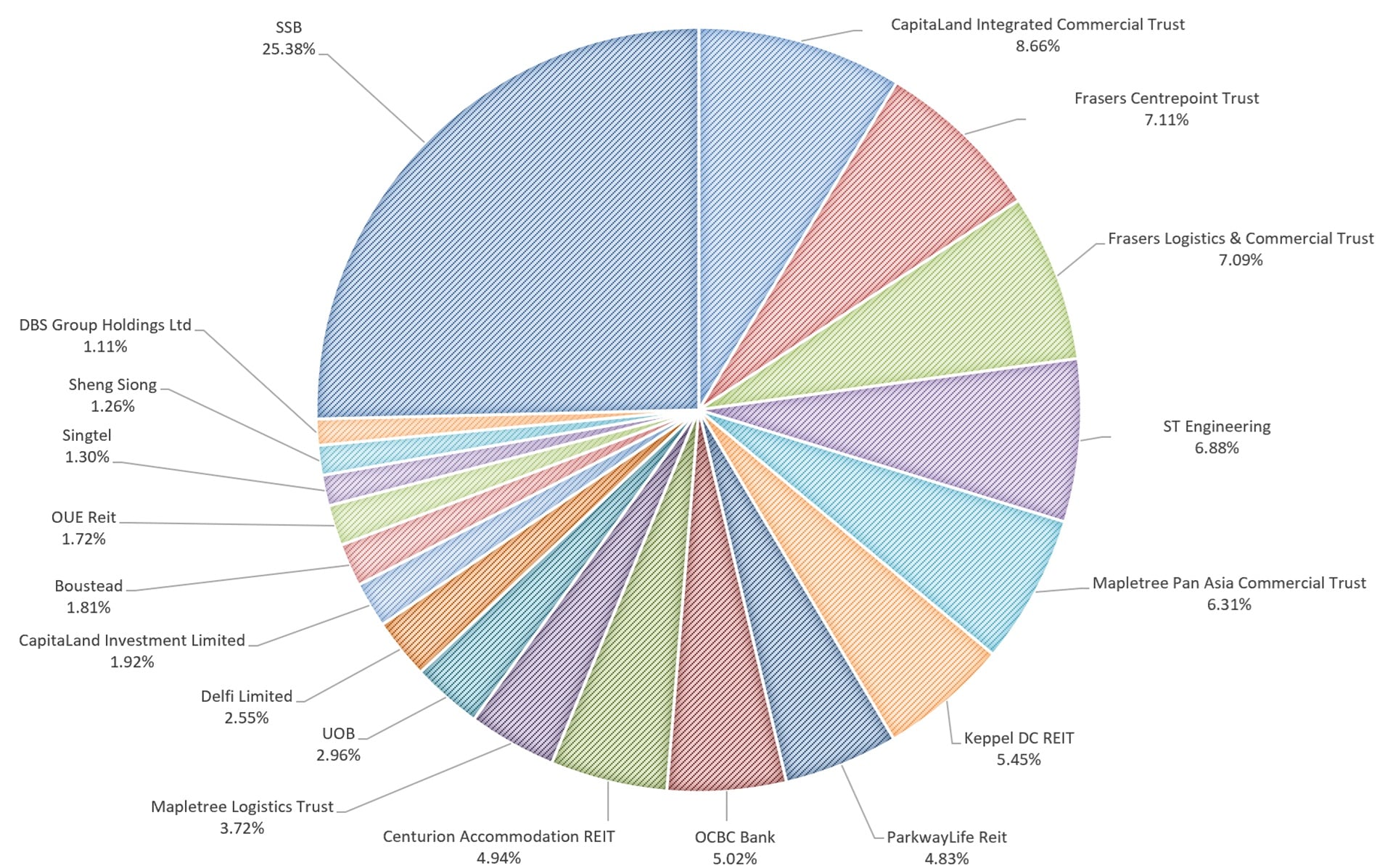
Above is my Singapore dividend stock portfolio. In 2025, I collected a total dividend of $20,289.89, mainly contributed from the dividend stocks above.
My stock portfolio reflects a disciplined, long‑term strategy that keeps me aligned with my financial goals while steadily strengthening my financial goals progress. By anchoring my holdings in stable instruments like Singapore Savings Bonds and complementing them with a diversified mix of REITs, blue‑chip companies, and defensive businesses, I have built a structure that balances growth with resilience. This approach allows my investments to compound quietly over time, supporting the milestones I’ve set for myself and giving me confidence in the direction I am heading.
A key strength of my portfolio is the consistent passive income it generates. REITs such as CapitaLand Integrated Commercial Trust and Frasers Centrepoint Trust provide reliable distributions, while companies like OCBC, UOB, and ST Engineering add stability and long‑term value. This combination ensures that my passive income stream remains dependable, reinforcing my financial goals progress month after month. Even during periods when I am not actively managing my investments, the portfolio continues working for me in the background.
As my passive income grows, it becomes a powerful engine that accelerates my journey toward my financial goals. Each dividend payout strengthens my financial foundation, reduces stress, and brings me closer to long‑term aspirations such as retirement security, lifestyle flexibility, or building generational wealth. By maintaining a thoughtful mix of income‑producing assets and stable long‑term positions, my portfolio demonstrates how strategic investing can turn consistency into meaningful financial goals progress, ultimately supporting the life I want to build.
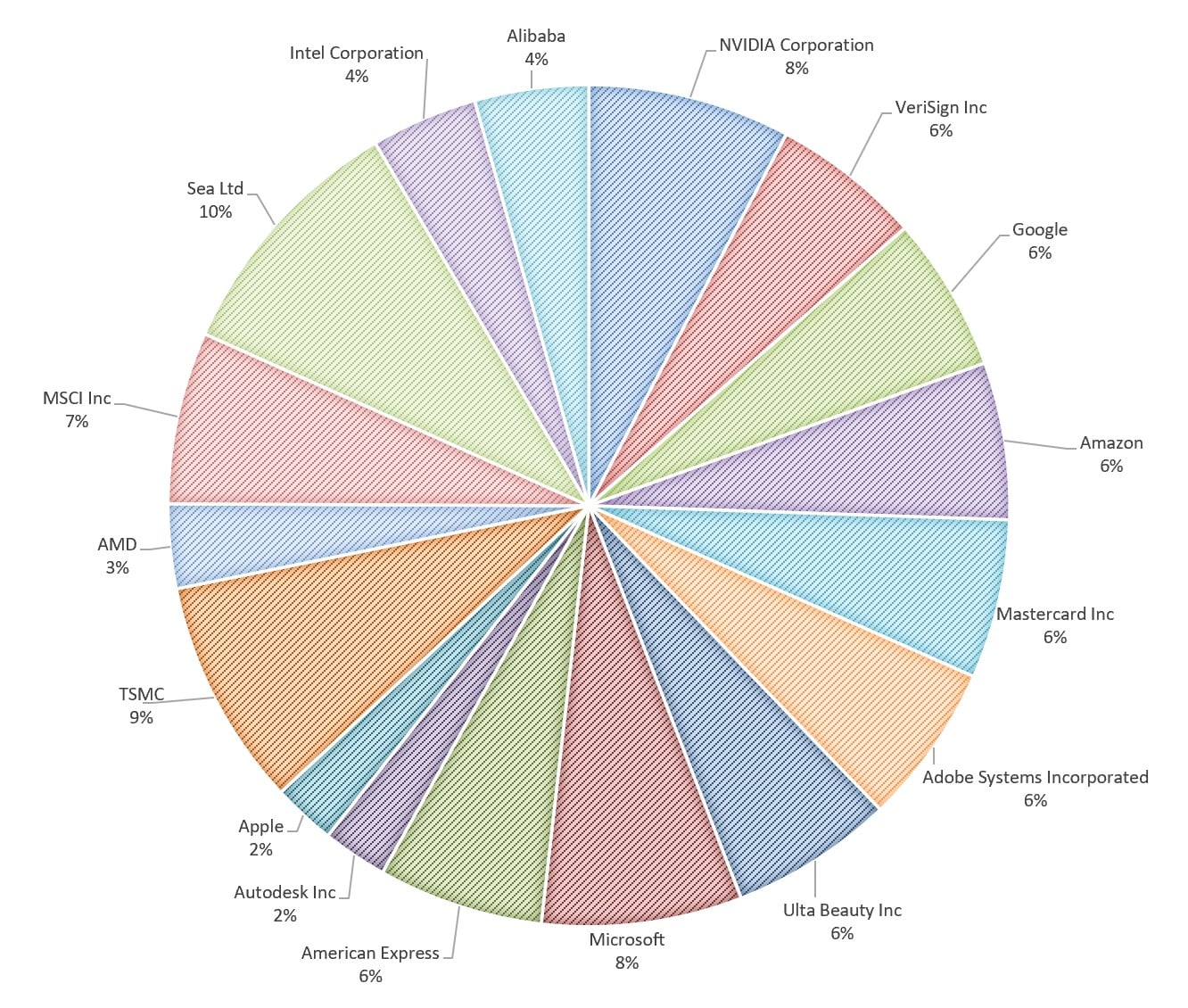
My US stock portfolio is built around high‑quality growth companies that have the potential to compound in value over the long term. By holding leaders across technology, semiconductors, digital payments, and e‑commerce, I am positioning myself for decades of innovation-driven expansion. Companies such as Microsoft, NVIDIA, TSMC, Amazon, and Google form the backbone of this strategy, supported by strong performers like MSCI, Mastercard, Adobe, and Ulta Beauty. These businesses operate in industries with durable demand and global reach, which gives me confidence that their earnings and eventually their share prices can continue to grow steadily over time.
As these growth stocks appreciate in value, they play a crucial role in helping me plan for my retirement. Instead of relying solely on dividends or fixed‑income instruments, I am using long‑term capital appreciation as a powerful engine to build wealth. The compounding effect of reinvested gains, combined with the resilience of market‑leading companies, strengthens my financial foundation year after year. By staying invested in businesses with strong competitive advantages and long‑term growth potential, I am creating a portfolio that not only grows with the global economy but also supports the retirement lifestyle I envision.
Summary of Financial Goals Progress for May 2026
Despite the increase in the total value of my financial assets, I am reminding myself not to celebrate too early. With global political tensions still simmering, especially between the US and Iran, any escalation could trigger another sharp market sell‑off. At the same time, the rapid rise of artificial intelligence brings its own risks. If AI innovations fail to translate into real business value, the sector could inflate into a bubble, one that might eventually burst and create broader financial instability.
For now, my focus is to stay invested, stay disciplined, and continue building up my savings. Many financial bloggers call this a “war chest”, a pool of capital that remains ready to deploy when the market presents opportunities. By strengthening this war chest, I am preparing myself to take advantage of future dips rather than fear them.
How are you working towards your financial goals today?