
The latest Singapore Savings Bond (SBMAY26, GX26050H) comes with an effective return of 2.14% over 10 years, assuming I hold it until maturity. Even if I exit after just one year, the 1.40% first‑year rate still outperforms what many digital banks are offering today. For comparison, GXS Bank’s saving and boost pockets currently provide 1.08% and 1.30% per annum, both lower than the starting yield of this SSB tranche.
What are the benefits of investing in Singapore savings bonds? What makes the Singapore Savings Bond stand out is its stability. Unlike promotional bank rates that shift every quarter, the SSB gives me a clear view of my future returns. The built‑in step‑up structure rewards long‑term commitment, which fits neatly with how I have been planning for retirement. It is reassuring to know exactly how my money will grow without having to chase the next short‑term offer.
When it comes to building a stable foundation for my portfolio, Singapore Savings Bonds naturally stand out. They are designed to be low‑risk, especially when compared with more volatile investments like individual stocks or ETFs. Market‑linked assets can swing sharply with economic news, earnings reports, or global events, but SSBs offer something far simpler: steady, predictable returns backed by the Singapore Government.
For anyone who values capital preservation and peace of mind, SSBs serve as a reliable anchor. They may not deliver the explosive gains that equities sometimes offer, but they also do not expose me to the same level of uncertainty. In a long‑term financial plan, that stability is worth a lot.
What is the minimum investment amount for the special government bond? The low entry point of $500 also makes it easy to build a position gradually. But beyond the numbers, this is part of a bigger habit I have been cultivating – consistent, disciplined saving. The longer you hold them, the higher your effective return. Each individual can invest up to S$200,000, inclusive of both cash and SRS contributions. Adding SBMAY26 to my portfolio is not just another investment move. It reinforces the long‑term strategy my wife and I have been shaping for years. Slow, steady growth, predictable income, and the comfort of knowing our retirement plans are progressing in the right direction.
How to Buy Singapore Savings Bonds Online
Buying Singapore Savings Bonds is a straightforward process, and everything can be done digitally once you have an individual CDP account with the Central Depository. This account is essential because it serves as the place where your SSB holdings will be kept. After your CDP account is set up, you can apply for SSBs through the online banking platforms of DBS/POSB, OCBC or UOB, or by using their ATMs. Simply log in to your bank account, navigate to the Singapore Government Securities section and follow the on‑screen instructions to submit your application.
The minimum investment amount is $500, and you can increase your subscription in multiples of $500, up to a maximum of $200,000 per SSB issuance. A new bond is released every month, and its interest rates are updated annually based on prevailing market conditions. Once your application is successful, interest will be paid to you twice a year, and your full principal will be returned at the end of the ten‑year term.
Can I redeem Singapore savings bonds before maturity?
You are free to redeem your Singapore Savings Bonds (SSBs) at any time before they mature, and there is no penalty for doing so. This flexibility is one of the reasons SSBs are so popular. You are not locked in, and there is no minimum holding period. If you ever need to access your funds, you can simply redeem your bonds in any month of your choosing.
Redemption is straightforward. You can submit a request through DBS digibank (mobile or online) or use any DBS/POSB ATM. Applications open at 6:00 pm on the first business day of the month and close at 9:00 pm on the fourth last business day. Do note that redemptions can only be made Monday to Saturday, between 7:00 am and 9:00 pm, excluding public holidays. Each request comes with a non‑refundable S$2 fee, and once submitted, it cannot be changed or cancelled.
Where Can I Check the Latest Interest Rates for Singapore Savings Bonds?
The latest Singapore Savings Bond interest rates are published on the Monetary Authority of Singapore’s Singapore Savings Bond Portal. Each monthly issuance comes with a full schedule of rates across the ten‑year term, making it easy for investors to review and compare returns. MAS also provides a Singapore Savings Bonds Calculator, which allows you to estimate your total interest earnings based on your investment amount and holding period.
For instance, an investment of S$10,000 in the SBMAY26 (GX26050H) tranche held to maturity would generate a total of S$2,163.86 in interest. Below is the breakdown of the annual payouts for SBMAY26 (GX26050H) across its ten‑year duration.
| Year from issue date | Interest % | Average return per year %* |
| 1 | 1.40 | 1.40 |
| 2 | 1.59 | 1.49 |
| 3 | 1.74 | 1.57 |
| 4 | 1.89 | 1.65 |
| 5 | 2.05 | 1.73 |
| 6 | 2.23 | 1.81 |
| 7 | 2.41 | 1.89 |
| 8 | 2.60 | 1.97 |
| 9 | 2.78 | 2.05 |
| 10 | 2.96 | 2.14 |
*At the end of each year, on a compounded basis.
How To Track Singapore Savings Bonds?
You can monitor your Singapore Savings Bonds by visiting the Monetary Authority of Singapore (MAS) website, which offers up-to-date information on bond issuance and performance.
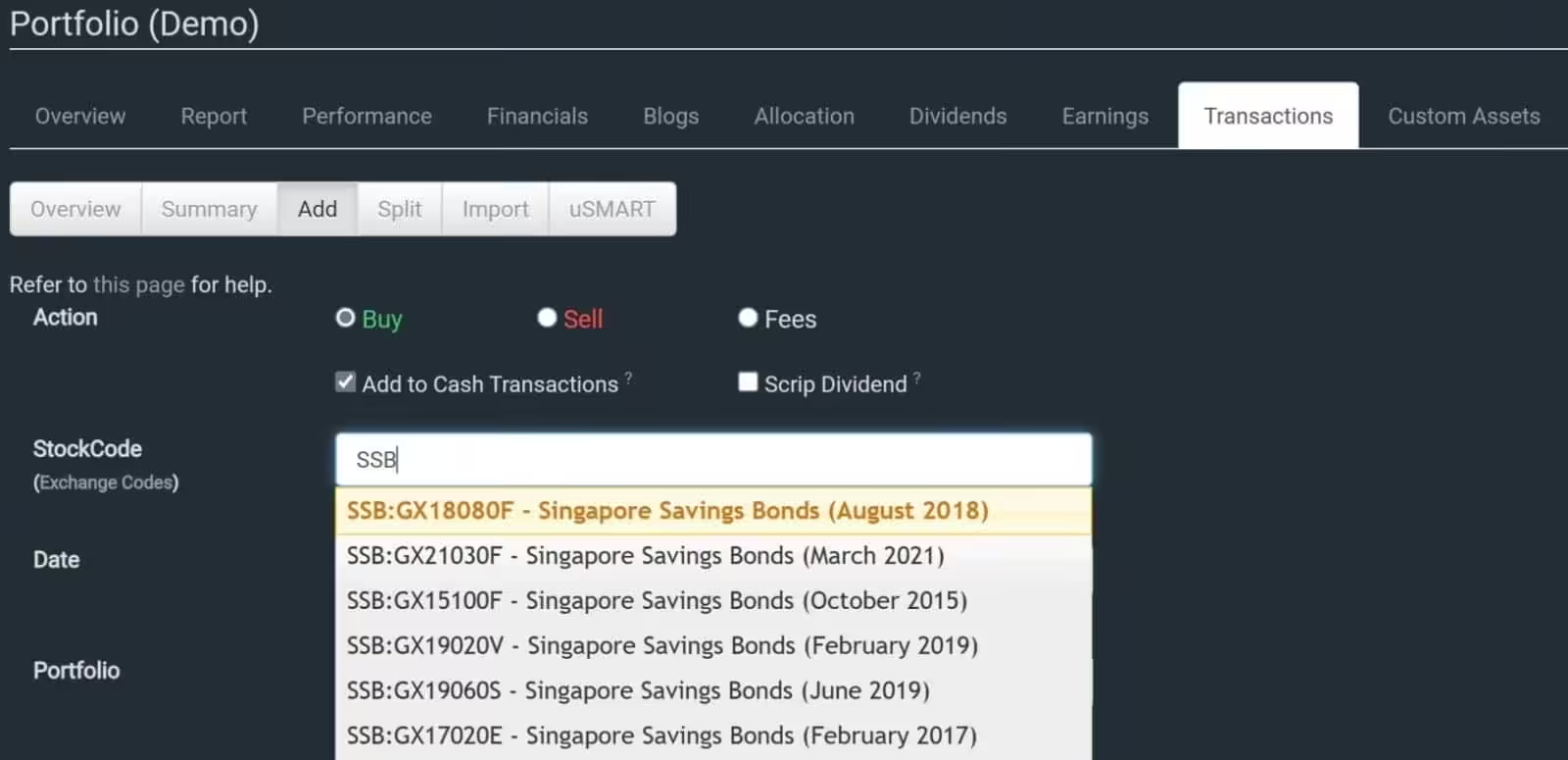 I use Stocks Café to track my SSB Singapore purchases. If you like to know more about Stocks Cafe, please read up my previous review of Stocks Cafe.
Should I Consider SBMAY26 (GX26050H)?
The ongoing conflict between Iran and the US has pushed global oil markets into turmoil, and the ripple effects are showing up in the stock market as well. Volatility has become the norm, and in an environment like this, it is uncommon to see Singapore Savings Bond yields climb above 2 percent. With rates at this level, I am taking the opportunity to allocate part of my cash into the latest SSB tranche.
The SBMAY26 Singapore Savings Bond is particularly appealing right now. At a time when fixed‑deposit and high‑yield savings accounts are slowly trimming their rates, this SSB offers a 10‑year effective return of 2.14 percent per annum, along with a 1.40 percent return in the first year. These figures may not be flashy, but they deliver something that is becoming increasingly valuable which is stability. The step‑up structure provides predictable growth, and the government backing adds a layer of security that’s hard to match in today’s uncertain climate.
Since I have some spare cash set aside, I am also looking at SBMAY26 (GX26050H) as a sensible addition to my long‑term retirement plan. It lets me lock in steady returns while complementing the rest of my portfolio, offering a disciplined and low‑maintenance way to grow my savings over the years.