
Investors searching for stable, recurring passive income often find themselves exploring REITs in Singapore, one of the most established and reliable income-producing asset classes in the region. With their consistent distributions, exposure to high-quality real estate, and strong regulatory framework, REITs in Singapore continue to attract both new and seasoned investors. As we move through 2026, the environment for Singapore REITs remains dynamic, shaped by interest rate movements, global economic uncertainty, and sector-specific trends. Yet despite the volatility, REITs in Singapore remain a powerful tool for building long-term passive income.
My own investing journey reflects this. In 2025, the dividends paid out from the REITs in Singapore within my stock portfolio amounted to $20,289.89 in passive income. This milestone was not achieved through speculation or market timing. It was the result of disciplined accumulation, reinvestment, and a long-term focus on high-quality REITs in Singapore with sustainable yields. As more investors seek financial stability and predictable cash flow, Singapore REITs continue to stand out as one of the most dependable income-generating investments available.
In this article, we will explore the benefits of investing in Singapore REITs, examine the current dividend yields of nineteen major Singapore REITs, and discuss how investors can position themselves for long-term passive income and sustainable dividend growth.
Why Singapore REITs Remain a Cornerstone for Passive Income and Dividend Investing
Singapore’s REIT market is one of the most developed and respected in Asia. With over forty listed REITs in Singapore spanning industrial, commercial, retail, hospitality, and data centre sectors, investors have access to a wide range of income-producing assets. These include logistics hubs, business parks, Grade A office towers, shopping malls, hotels, and even data centres. These are properties that would otherwise be inaccessible to most individuals, yet REITs in Singapore make them available through fractional ownership.
One of the biggest reasons investors turn to Singapore REITs is their attractive dividend yields. Most offer between five and eight percent, significantly higher than savings accounts, fixed deposits, or government bonds. Even during periods of economic uncertainty, Singapore REITs have historically maintained stable dividend distributions due to long-term leases and predictable rental income, making them useful for building passive income.
The Monetary Authority of Singapore enforces strict rules on leverage, transparency, and payout ratios. Singapore REITs must distribute at least ninety percent of their taxable income to unitholders, ensuring a steady flow of dividend income. This regulatory environment reduces risk and enhances investor confidence, making Singapore REITs a preferred choice for income-focused portfolios and long-term passive income planning.
Many REITs in Singapore own premium assets in prime locations. Ascendas REIT owns business parks and logistics facilities across Singapore, Australia, and Europe. Mapletree Industrial Trust has a growing portfolio of data centres. Frasers Centrepoint Trust owns suburban malls with strong footfall. CapitaLand Integrated Commercial Trust owns iconic assets like Raffles City and Plaza Singapura. These assets tend to remain resilient even during downturns, which strengthens the long-term appeal of REITs in Singapore.
Another advantage is diversification. Many REITs in Singapore have expanded beyond the local market into Australia, Europe, Japan, and the United States. This diversification helps reduce concentration risk and provides exposure to global growth trends.
REIT dividends are typically paid quarterly or semi-annually. When reinvested, these dividend distributions compound over time, accelerating portfolio growth. My own passive income milestone of $20,289.89 in 2025 was the result of years of reinvesting dividends and steadily increasing my holdings in Singapore REITs.
Understanding the Current Market Environment for Singapore REITs and Dividend Investors
The global investment landscape in 2026 is shaped by several macroeconomic forces that directly impact Singapore REITs. Interest rates, after several years of aggressive hikes, are showing signs of stabilising. This is positive for Singapore REITs because borrowing costs become more predictable and refinancing risks ease. As rates plateau or gradually decline, REIT valuations often recover, which can support dividend stability and passive income investors.
Geopolitical uncertainty, such as the Iran–US conflict, has caused volatility in global markets. Rising oil prices and shifting investor sentiment have affected asset prices across sectors. While this has led to short-term declines in REITs in Singapore, it has also created opportunities for long-term investors to accumulate units at attractive valuations.
Sector-specific trends also play a role. Industrial and logistics Singapore REITs benefit from e-commerce growth and supply chain diversification. Data centre REITs like NTT DC REIT are supported by rising demand for cloud computing and AI infrastructure. Hospitality REITs are recovering as global travel normalises. Retail REITs with suburban exposure remain resilient due to stable footfall. These trends highlight the importance of understanding the unique drivers behind each category of Singapore REITs when building a dividend portfolio for passive income.
Yield Profiles Across Singapore REIT Categories
High-yield Singapore REITs, such as ESR REIT and Stoneweg EUTrust, offer dividend yields above seven percent. These REITs may come with higher risk, but they also provide attractive passive income potential. Balanced-yield Singapore REITs, offering between six and seven percent, include CapitaLand Integrated Commercial Trust, CapitaLand Ascott Trust, Starhill Global REIT, Mapletree Industrial Trust, Far East Hospitality Trust, Lendlease REIT, OUE REIT, AIMS APAC REIT, and Mapletree Commercial Trust. These REITs often have strong sponsors and diversified portfolios. Lower-yield but more stable Singapore REITs include Keppel REIT, Mapletree Logistics Trust, Frasers Logistics and Commercial Trust, NTT Data Centre REIT, Frasers Centrepoint Trust, and Suntec REIT. These REITs may appeal to conservative dividend investors seeking stability over maximum yield.
How REIT Dividends Build Long-Term Passive Income
One of the most powerful aspects of investing in Singapore REITs is the ability to generate recurring passive income. Singapore REITs distribute most of their taxable income to unitholders, creating a steady stream of dividends. In my own portfolio, this dividend investing strategy has paid off significantly. In 2025, I received $20,289.89 in REIT dividends, a milestone that reflects years of disciplined investing, reinvestment, and focus on passive income.
Dividends from Singapore REITs provide predictable cash flow, which can supplement salary or retirement funds. Reinvesting dividends accelerates portfolio growth, allowing compounding to work in your favour. Many Singapore REITs have rental escalation clauses tied to inflation, helping preserve purchasing power. Income-producing assets also tend to be more resilient than growth stocks, reducing overall portfolio volatility for dividend and passive income investors.
Building a Singapore REIT Portfolio for Passive Income
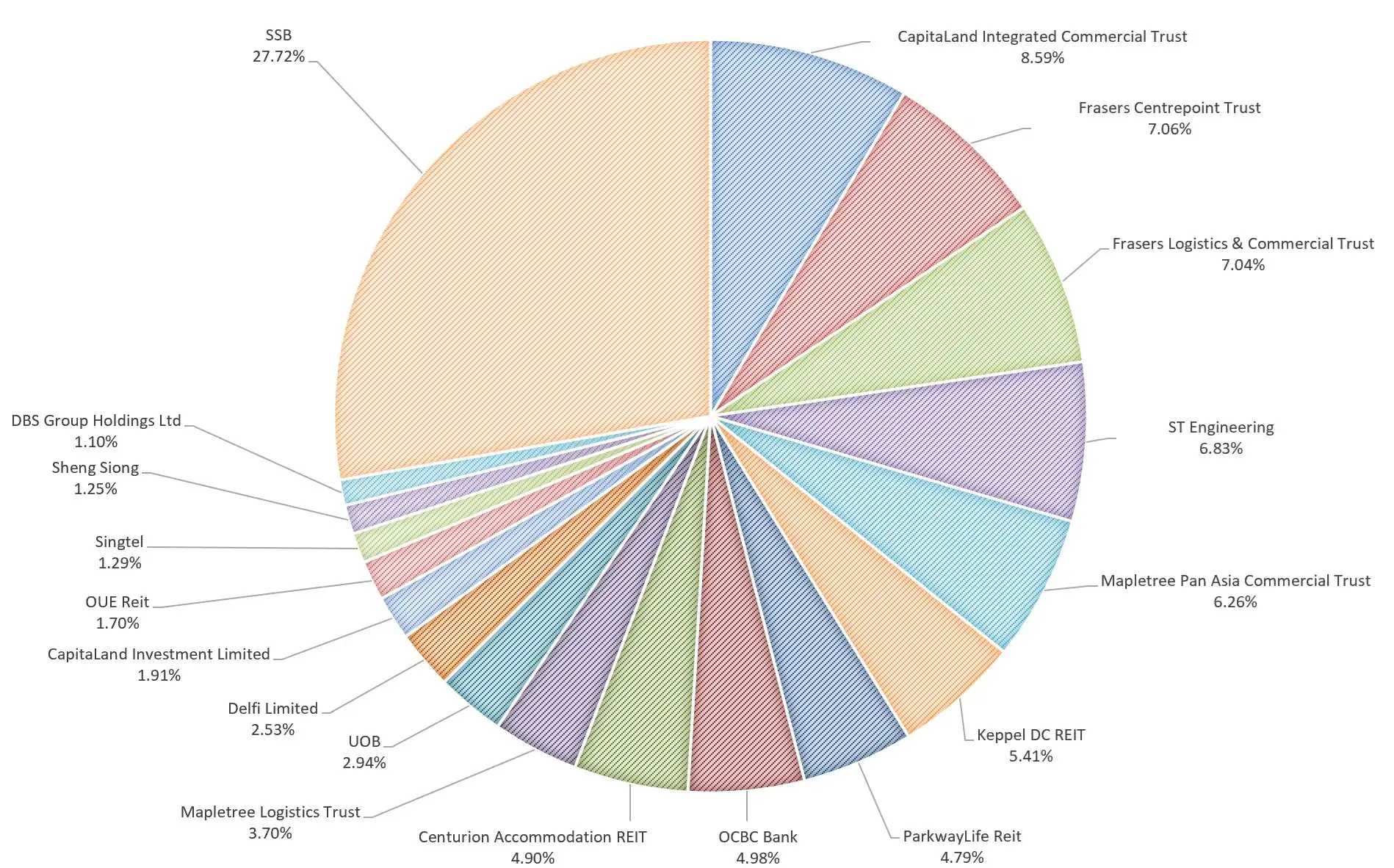
Constructing a strong portfolio of Singapore REITs requires thoughtful planning. Diversification across sectors is essential. A balanced Singapore REIT portfolio might include industrial, retail, office, hospitality, and data centre REITs. Focusing on sustainable dividend yields is important because high yields are attractive only if supported by strong fundamentals. Monitoring gearing and interest costs helps reduce refinancing risk. Looking for Singapore REITs trading below net asset value can reveal undervalued opportunities. Above all, consistency matters. The most successful investors in Singapore REITs stay invested through cycles and reinvest dividends to maximise long-term passive income returns.
How to Screen for Singapore REITs for Dividend and Passive Income Investing
If you are planning to buy Singapore REITs in July 2026, the first step is identifying which REITs fit your portfolio. One of the most effective techniques in REIT investing is stock screening, a systematic process that filters through a wide universe of REITs based on specific financial criteria.
In Singapore, stock screening helps narrow down potential Singapore REIT opportunities by focusing on key dividend and passive income metrics such as:
- Dividend yield – to evaluate passive income potential
- Price-to-Earnings (P/E) ratio – to assess valuation
- Gearing levels – to measure financial stability and risk
- Market capitalization & sector exposure – to diversify effectively
Benefits of Using REIT Screening Tools

With today’s abundance of online screening platforms, investors can:
- Generate a shortlist of high-quality REITs that match investment goals
- Compare REITs side by side for yields, valuations, and leverage
- Make data-driven decisions backed by transparent financial metrics
For anyone serious about building sustainable passive income through Singapore REITs, stock screening is an indispensable tool. By leveraging these platforms, you can confidently select REITs that align with your financial objectives and long-term wealth strategy.
To streamline my REIT selection process, I rely on the Stocks Café Stock Screener. It helps me filter for REITs that meet my predefined investment criteria, allowing me to focus on a curated shortlist worth deeper analysis.
Here are the key parameters I use to screen for dividend-paying REITs. Please feel free to adjust them based on your own risk tolerance and investment goals:
- Market Capitalization: ≥ S$1 billion
- Current Dividend Yield: Between 5% and 10%
- Price-to-Book Ratio: ≤ 3
This approach ensures I am targeting Singapore REITs with solid fundamentals, attractive dividend yields, and reasonable valuations, ideal for building a sustainable passive income portfolio.
Risks of Investing in Singapore REITs
While Singapore REITs can be attractive for passive income and dividend investing, they are not risk-free. The biggest risk is interest rate risk. When borrowing costs rise, REITs may face higher refinancing expenses, which can reduce distributable income and put pressure on dividend payouts. Falling property valuations can also affect net asset value and increase gearing levels.
Other risks include tenant vacancies, negative rental reversions, weaker occupancy, asset concentration, foreign exchange exposure from overseas properties, and distribution cuts. Some Singapore REITs also rely heavily on a few key tenants or specific property sectors, which means a downturn in one area can affect dividend stability. For this reason, investors should not look at dividend yield alone when selecting Singapore REITs for passive income.
Key REIT Metrics Beyond Dividend Yield
Dividend yield is useful, but it is only the starting point. A stronger analysis of Singapore REITs should also include distribution per unit, or DPU, because DPU shows how much cash is paid for each unit held. If DPU is flat or growing, the dividend may be more sustainable. If DPU keeps falling, a high dividend yield may simply reflect a falling unit price.
Investors should also review gearing, interest coverage ratio, debt maturity profile, occupancy rate, weighted average lease expiry, rental reversion, net property income, and price-to-net asset value. Gearing indicates how much debt the REIT is carrying. Interest coverage ratio shows how comfortably the REIT can service its interest expenses. Occupancy and WALE give a sense of income visibility, while rental reversion shows whether the REIT can renew leases at higher or lower rents.
For Singapore REITs, leverage and interest coverage are especially important because MAS has rationalised leverage requirements so that REITs are subject to a single aggregate leverage limit of 50% and a minimum interest coverage ratio threshold of 1.5 times. These rules help investors compare financial strength across REITs more consistently.
How to Avoid REIT Yield Traps
A high dividend yield can look attractive, especially for investors building passive income. However, a very high yield may sometimes be a warning sign rather than an opportunity. If the unit price has fallen sharply because investors expect weaker DPU, asset write-downs, rising debt costs, or poor rental demand, the REIT may become a yield trap.
Before buying high-yield Singapore REITs, I prefer to check whether the dividend is supported by stable occupancy, healthy rental reversions, manageable gearing, strong sponsors, and a well-spread debt maturity profile. A sustainable 5% to 6% dividend yield from a resilient REIT may be better than a 9% yield that is at risk of being cut.
Comparing Different Singapore REIT Sectors
| REIT Sector | Strengths | Key Risks |
|---|---|---|
| Industrial and logistics | Supported by e-commerce, supply chain diversification, business parks, and warehouse demand. | Can be sensitive to asset valuations, tenant concentration, and economic cycles. |
| Retail | Suburban malls can benefit from recurring consumer spending and stable footfall. | Risks include weak retail sales, tenant turnover, and pressure from online shopping. |
| Office and commercial | Prime office assets can provide stable rental income and long-term tenant relationships. | Hybrid work trends, economic slowdowns, and leasing weakness can affect occupancy. |
| Hospitality | Can benefit from tourism recovery, business travel, and higher room rates. | More cyclical and sensitive to travel demand, recessions, and geopolitical shocks. |
| Data centre | Supported by cloud computing, digitalisation, and AI infrastructure demand. | Requires high capital expenditure and may face power, cooling, and technology-related risks. |
This sector comparison shows why diversification matters. A portfolio made up only of high-yield hospitality or office Singapore REITs may behave very differently from one that includes retail, logistics, and data centre exposure. For passive income investors, the goal is not just to chase the highest dividend, but to build a balanced stream of income across different property cycles.
How Interest Rates Affect Singapore REITs
Interest rates are one of the most important factors affecting Singapore REITs. REITs use debt to acquire and manage properties, so higher rates can increase borrowing costs and reduce distributable income. At the same time, when fixed deposits, Treasury bills, or government bonds offer higher yields, investors may demand higher dividend yields from REITs, which can push REIT prices lower.
The reverse can also be true. When interest rates stabilise or decline, refinancing pressure may ease, debt costs may become more manageable, and yield-focused investors may return to Singapore REITs. REITs with lower gearing, higher fixed-rate debt, longer debt maturity, and strong interest coverage are usually better positioned to protect dividends during periods of rate volatility.
Portfolio Allocation: How Much Should You Put Into Singapore REITs?
Portfolio allocation is one of the most important decisions for investors using Singapore REITs to build passive income. While REITs can provide attractive dividend cash flow, they should still be part of a diversified portfolio rather than the only investment holding. A balanced portfolio may include Singapore REITs, dividend stocks, exchange-traded funds, bonds, fixed deposits, Treasury bills, and cash reserves.
For investors who rely heavily on dividend income, Singapore REITs may form a meaningful portion of the income portfolio. However, concentration risk should be managed carefully. Instead of placing too much capital into one REIT or one sector, I prefer to spread exposure across industrial, retail, commercial, hospitality, logistics, and data centre REITs. This reduces the impact if one property sector faces weak rental demand or a temporary dividend cut.
Position sizing also matters. A high-yield Singapore REIT may look attractive, but I would avoid allowing any single REIT to dominate the portfolio. A practical approach is to build positions gradually, review each REIT’s fundamentals regularly, and rebalance when one holding becomes too large. This helps keep passive income sustainable without taking unnecessary risk.
Dividend reinvestment is another key allocation decision. Investors who do not need the cash flow immediately can reinvest dividends into undervalued Singapore REITs or other income-producing assets. Over time, reinvestment can increase the number of units owned, which may lead to higher future dividend income and stronger long-term passive income growth.
Ultimately, there is no perfect allocation that suits every investor. Younger investors may prefer a higher allocation to growth assets, while retirees may prioritise dividend stability and income visibility. The right allocation depends on personal goals, risk tolerance, time horizon, emergency funds, and whether the passive income from Singapore REITs is meant to supplement salary, support retirement, or fund future financial freedom.
Who Are Singapore REITs Suitable For?
Singapore REITs may be suitable for investors who want recurring dividend income, exposure to real estate without buying physical property, and a practical way to build passive income over time. They can also be useful for retirees, income-focused investors, or long-term investors who prefer cash flow from real assets.
However, Singapore REITs may not be suitable for investors who need guaranteed income, very low volatility, or short-term capital gains. REIT prices can move up and down, and dividends can be reduced if rental income weakens or financing costs rise. As with any investment, investors should match REIT exposure to their own risk tolerance, time horizon, and income needs.
List of Singapore REITs Screened in July 2026
Below is the list of Singapore REITs I screened in the month of July 2026 for dividend yield, valuation, and passive income potential.
ESR REIT (SGX: 9A4U)
Market Capitalization: SGD 1.9B
Current Dividend Yield: 9.53%
Price to Equity: 329.891
Price to Book: 0.736
Net Asset Value (NAV): SGD 3.126
Closing Price (3-July-26): SGD 2.30
Stoneweg EUTrust SGD (SGX: SEB)
Market Capitalization: SGD 1.3B
Current Dividend Yield: 8.59%
Price to Equity: 11.247
Price to Book: 0.716
Net Asset Value (NAV): SGD 3.183
Closing Price (3-July-26): SGD 2.32
Stoneweg EUTrust EUR (SGX: SET)
Market Capitalization: SGD 1.3B
Current Dividend Yield: 8.47%
Price to Equity: 11.335
Price to Book: 0.722
Net Asset Value (NAV): SGD 2.147
Closing Price (3-July-26): SGD 2.334
Ascendas REIT (SGX: A17U)
Market Capitalization: SGD 12.4B
Current Dividend Yield: 7.53%
Price to Equity: 14.92
Price to Book: 1.058
Net Asset Value (NAV): SGD 2.353
Closing Price (3-July-26): SGD 2.49
CapitaLand Ascott Trust (SGX: HMN)
Market Capitalization: SGD 3.4B
Current Dividend Yield: 6.82%
Price to Equity: 11.046
Price to Book: 0.702
Net Asset Value (NAV): SGD 1.274
Closing Price (3-July-26): SGD 0.895
Starhill Global REIT (SGX: P40U)
Market Capitalization: SGD 1.3B
Current Dividend Yield: 6.70%
Price to Equity: 11.563
Price to Book: 0.711
Net Asset Value (NAV): SGD 0.767
Closing Price (3-July-26): SGD 0.545
Mapletree Industrial Trust (SGX: ME8U)
Market Capitalization: SGD 5.5B
Current Dividend Yield: 6.55%
Price to Equity: 26.218
Price to Book: 1.056
Net Asset Value (NAV): SGD 1.837
Closing Price (3-July-26): SGD 1.94
Far East Hospitality Trust (SGX: Q5T)
Market Capitalization: SGD 1.2B
Current Dividend Yield: 6.49%
Price to Equity: 39.472
Price to Book: 0.649
Net Asset Value (NAV): SGD 0.878
Closing Price (3-July-26): SGD 0.57
CapitaLand Integrated Commercial Trust (SGX: C38U)
Market Capitalization: SGD 18.9B
Current Dividend Yield: 6.48%
Price to Equity: 19.296
Price to Book: 1.11
Net Asset Value (NAV): SGD 2.162
Closing Price (3-July-26): SGD 2.40
Lendlease REIT (SGX: JYEU)
Market Capitalization: SGD 1.9B
Current Dividend Yield: 6.35%
Price to Equity: 21.792
Price to Book: 0.705
Net Asset Value (NAV): SGD 0.815
Closing Price (3-July-26): SGD 0.575
OUE REIT (SGX: TS0U)
Market Capitalization: SGD 2B
Current Dividend Yield: 6.19%
Price to Equity: 75.691
Price to Book: 0.642
Net Asset Value (NAV): SGD 0.56
Closing Price (3-July-26): SGD 0.36
Mapletree Pan Asia Commercial Trust (SGX: N2IU)
Market Capitalization: SGD 6.8B
Current Dividend Yield: 6.18%
Price to Equity: 26.075
Price to Book: 0.726
Net Asset Value (NAV): SGD 1.776
Closing Price (3-July-26): SGD 1.29
Frasers Logistics & Commercial Trust (SGX: BUOU)
Market Capitalization: SGD 3.7B
Current Dividend Yield: 6.11%
Price to Equity: 17.203
Price to Book: 0.859
Net Asset Value (NAV): SGD 1.123
Closing Price (3-July-26): SGD 0.965
Keppel REIT (SGX: K71U)
Market Capitalization: SGD 4.3B
Current Dividend Yield: 6.05%
Price to Equity: 7.85
Price to Book: 0.629
Net Asset Value (NAV): SGD 1.374
Closing Price (3-July-26): SGD 0.865
AIMS APAC REIT (SGX: O5RU)
Market Capitalization: SGD 1.3B
Current Dividend Yield: 5.97%
Price to Equity: 12.527
Price to Book: 0.81
Net Asset Value (NAV): SGD 2.037
Closing Price (3-July-26): SGD 1.65
Mapletree Logistics Trust (SGX: M44U)
Market Capitalization: SGD 6.2B
Current Dividend Yield: 5.95%
Price to Equity: 24.503
Price to Book: 0.884
Net Asset Value (NAV): SGD 1.38
Closing Price (3-July-26): SGD 1.22
NTT Data Centre REIT (SGX: NTDU)
Market Capitalization: SGD 1.2B
Current Dividend Yield: 5.91%
Price to Equity: 308.997
Price to Book: 0.966
Net Asset Value (NAV): SGD 1.255
Closing Price (3-July-26): SGD 1.217
Frasers Centrepoint Trust (SGX: J69U)
Market Capitalization: SGD 4.6B
Current Dividend Yield: 5.38%
Price to Equity: 20.166
Price to Book: 0.958
Net Asset Value (NAV): SGD 2.349
Closing Price (3-July-26): SGD 2.25
Suntec REIT (SGX: T82U)
Market Capitalization: SGD 4.3B
Current Dividend Yield: 5.07%
Price to Equity: 26.999
Price to Book: 0.671
Net Asset Value (NAV): SGD 2.175
Closing Price (3-July-26): SGD 1.46