
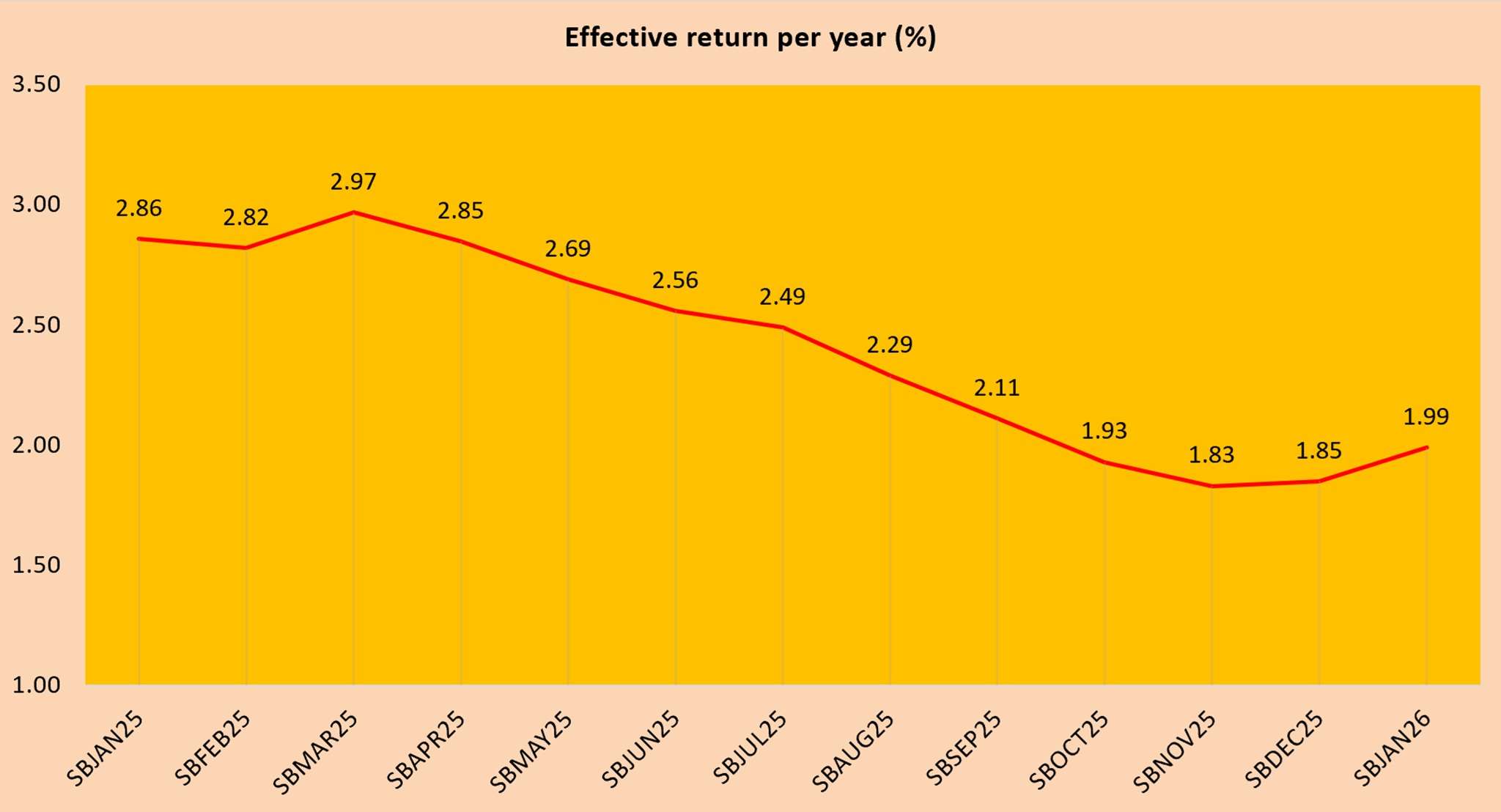
When I first looked at the numbers for the latest Singapore Savings Bond, SBJAN26 (GX26010A), I could not help but compare them to what the banks are offering right now. A one‑year holding gives me 1.33% per annum, while committing for the full 10 years locks in an effective 1.99% per annum. It may not sound dramatic, but in today’s environment where savings accounts and fixed deposits are sliding lower, those figures carry weight.
I remember watching the chart last month when rates hit their lowest point in November. It felt discouraging, almost like the ground was shifting beneath savers. Seeing the recovery in December gave me a sense of relief, like the tide was finally turning.
That is why SBJAN26 caught my attention. Unlike chasing promotional bank rates that change every few months, the bond offers predictability. I know exactly what I will get if I hold it, and the “step‑up” feature means my returns grow the longer I stay invested. It is almost like being rewarded for patience, a trait that aligns perfectly with how I have approached retirement planning.
With just $500 as the entry point, it feels accessible. And for me, it is not just about the numbers. It is about building a disciplined savings journey, one step at a time. Adding SBJAN26 to my portfolio is not just another investment decision, it is a way of reinforcing the long‑term plan my wife and I have been nurturing for years: steady growth, predictable income, and the peace of mind that comes with knowing our retirement savings are on track.
Why consider Singapore Savings Bonds?
Despite relatively modest yields, SSBs are low-risk investments, perfect for conservative investors seeking steady growth. The longer you hold them, the higher your effective return. Each individual can invest up to S$200,000, inclusive of both cash and SRS contributions.
In the next section, we will walk through how to calculate your potential returns using the MAS SSB Calculator.
Calculating Returns Using Singapore Savings Bonds (SSB) Calculator
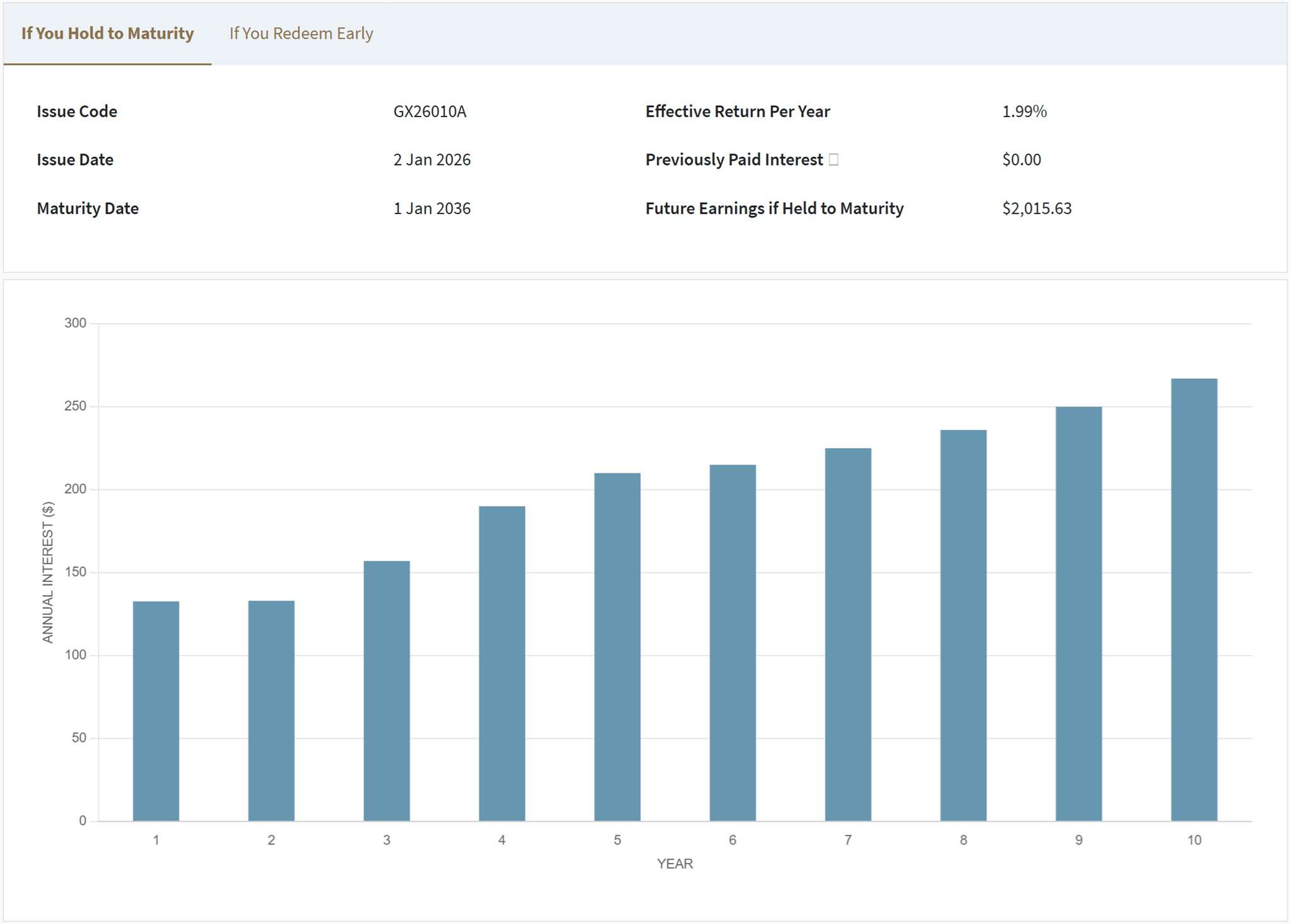
To help investors easily estimate their returns, the Monetary Authority of Singapore (MAS) offers a Singapore Savings Bonds Calculator. This tool allows you to project your interest earnings over a 10-year holding period.
For example, if you invest S$10,000 in the SBJAN26 (GX26010A) tranche and hold it to maturity, your total interest earned would be S$2,015.63. Here is a breakdown of the annual interest payouts for SBJAN26 (GX26010A) across its 10-year term.
| Year from issue date | Interest % | Average return per year %* |
| 1 | 1.33 | 1.33 |
| 2 | 1.33 | 1.33 |
| 3 | 1.57 | 1.41 |
| 4 | 1.90 | 1.53 |
| 5 | 2.10 | 1.64 |
| 6 | 2.15 | 1.72 |
| 7 | 2.25 | 1.79 |
| 8 | 2.36 | 1.86 |
| 9 | 2.50 | 1.92 |
| 10 | 2.67 | 1.99 |
*At the end of each year, on a compounded basis.
How to Buy Singapore Savings Bonds
To purchase Singapore Savings Bonds, you’ll need an individual CDP account with the Central Depository (CDP). Applications can be made via ATMs, internet banking, or directly through the websites of participating banks such as DBS/POSB, OCBC, and UOB. Just log in and follow the steps to subscribe.
The minimum investment is $500, with a cap of $200,000 per issue. Bonds are issued monthly, and their interest rates are revised annually. Once subscribed, you’ll receive interest payments twice a year, and your principal will be returned at the end of the 10-year bond term.
For more details, refer to How to Buy.
How to Sell Singapore Savings Bonds
You can sell your Singapore Savings Bonds at ATMs operated by participating banks like DBS/POSB, OCBC, and UOB. Just log in to your account at the ATM and follow the on-screen steps to complete the sale.
If your bonds are held under the Supplementary Retirement Scheme (SRS), you may also sell them through your designated SRS operator.
For more details, refer to How to Redeem.
How To Track Singapore Savings Bonds?
You can monitor your Singapore Savings Bonds by visiting the Monetary Authority of Singapore (MAS) website, which offers up-to-date information on bond issuance and performance.
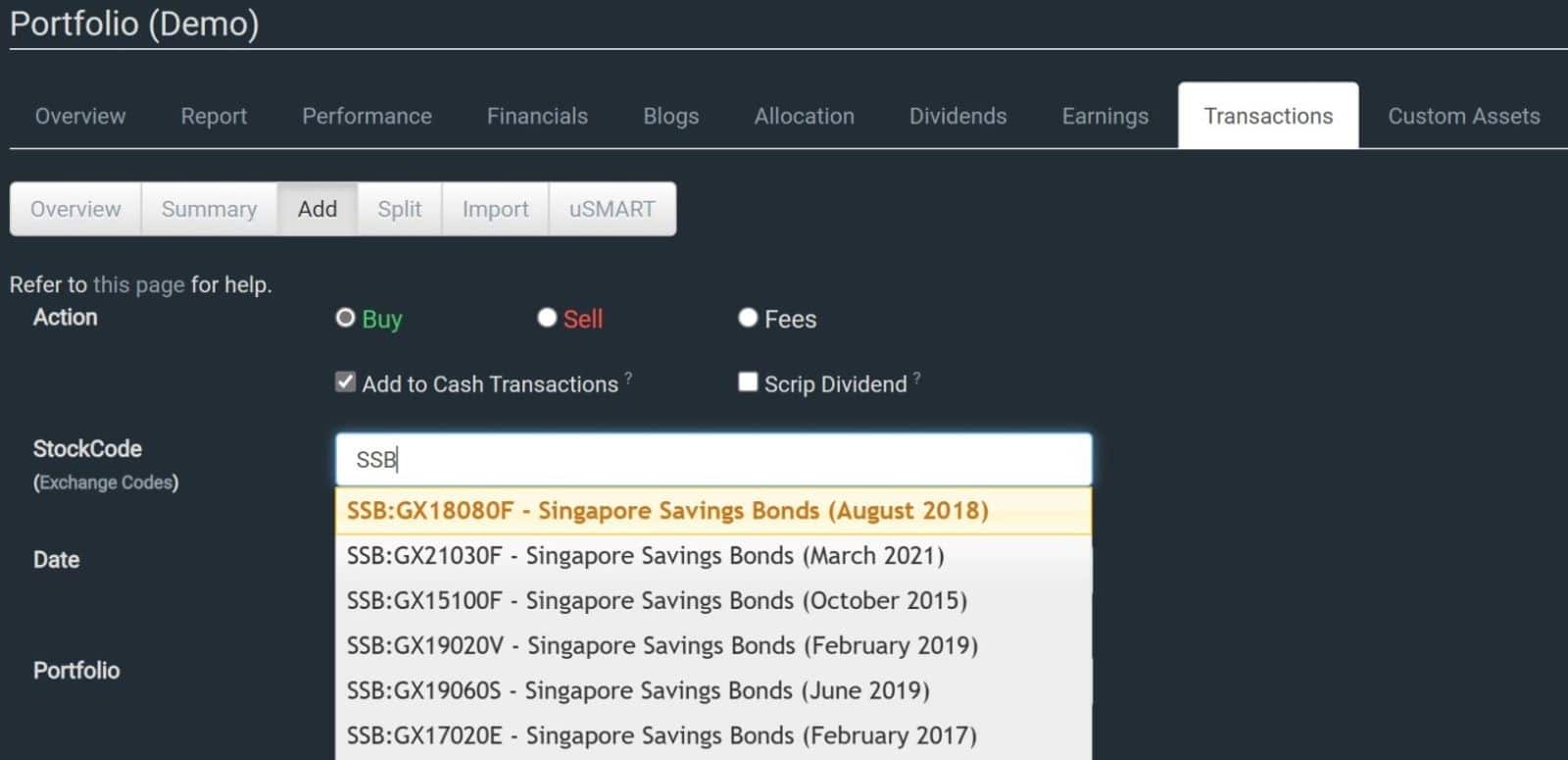 I use Stocks Café to track my SSB Singapore purchases. If you like to know more about Stocks Cafe, please read up my previous review of Stocks Cafe.
Should I Consider SBJAN26 GX26010A?
With interest rates on the decline, banks have been steadily trimming their deposit offerings. For example, the UOB Stash Account reduced its rate to 1.5% per annum starting 1st December 2025, while CIMB is currently offering just 1.30% per annum for a 3‑month fixed deposit.
Against this backdrop, the latest Singapore Savings Bond (SSB) issue stands out. It provides an effective return of 1.99% per annum if held to maturity over 10 years, and 1.33% per annum in the shorter term. While not sky‑high, these returns are relatively stable and predictable qualities that are increasingly valuable as bank rates continue to slide.
With some extra cash available, I am seriously considering adding SBJAN26 (GX26010A) to my retirement savings portfolio. It is a disciplined way to lock in steady returns while complementing my long‑term investment strategy.