
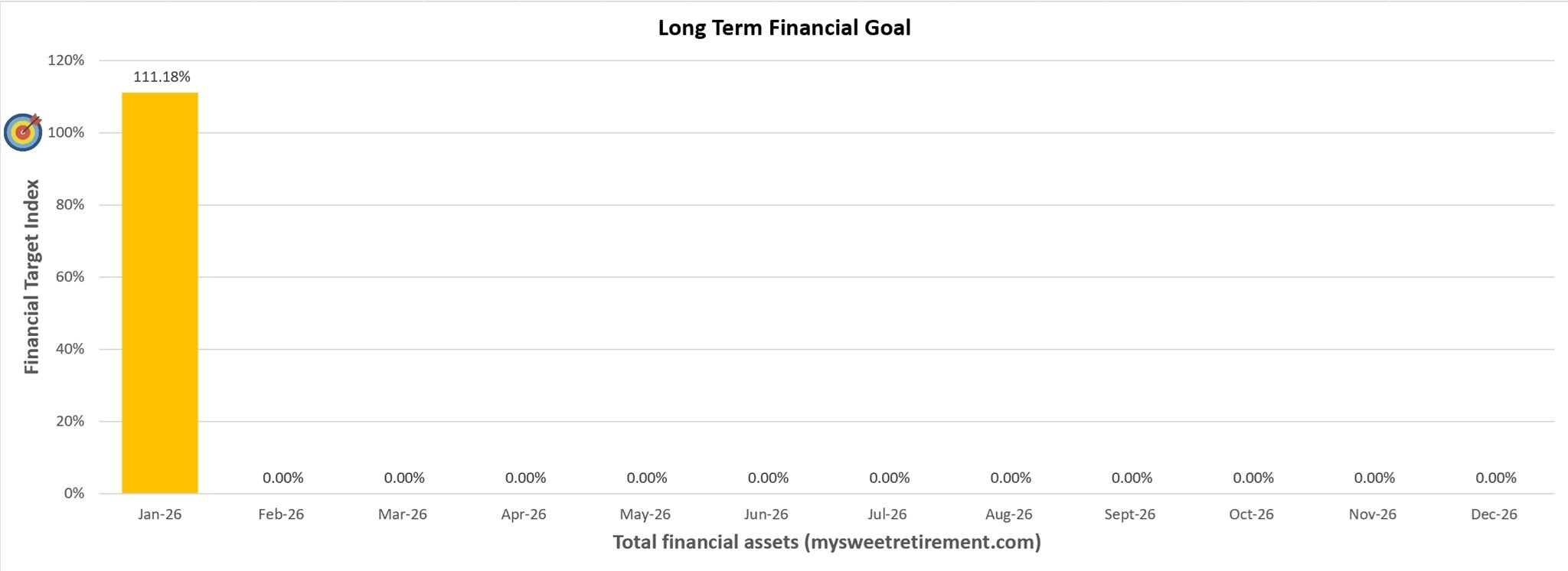
I am sharing an update on my Financial Goals Progress for January 2026. This month, the total value of my assets has risen to 111.18% of my target. The above chart shows the total value of my financial assets expressed as a percentage of my overall financial goal. These assets include my insurance savings, savings accounts, fixed deposits, Singapore Savings Bonds, Singapore Treasury Bills, the current market value of my stocks, and the funds in my Supplementary Retirement Scheme (SRS) account. I would not say that I have reached financial freedom but setting a financial goal helps me work towards it.
In this brand-new year, have you defined your financial goals yet? These goals are the specific targets you set to guide how you manage your money whether for short-term needs or long-term aspirations. Establishing financial goals gives you clarity, purpose, and motivation to make smarter financial choices. With clear objectives in place, you can monitor your progress, make informed decisions, and steadily build toward lasting financial stability and security. My long-term financial goal is to stash sufficient money (target) which can help me to retire early in Singapore.
How to set achievable financial goals?
To achieve my financial goal in 5 years, you need a lot of discipline in managing your money. Below are the actions I did.
Save 20 Percent of My Salary
GXS Bank offers a great feature that lets me create dedicated savings pockets. I have built a habit of allocating 20% of my salary into one of these pockets on the GXS Digital Bank. Every month, the moment my paycheck arrives, I transfer that portion straight in. It is a simple, consistent routine that steadily grows my cash reserves and gives me a reliable financial cushion I can draw on whenever I need it in the future.
Contribute to SRS
The Supplementary Retirement Scheme (SRS) is a voluntary savings scheme in Singapore that complements the Central Provident Fund (CPF) for retirement planning. It was introduced by the government in 2001 to encourage individuals to save more for their retirement and reduce the reliance on government assistance in old age.
Most working adults recognise the value of contributing to their Supplementary Retirement Scheme (SRS) account, especially for the tax relief it provides. To stay consistent, I created a dedicated savings pocket in the GXS Digital Bank and have been transferring funds into it every month. In December 2025, I closed that pocket and moved the accumulated amount along with the interest earned into my actual SRS account to maximise my tax benefits for the year.
I invested the money in my SRS account into Singapore Treasury Bills and Singapore Savings Bond to earn a higher interest rate.
Reinvest Dividends Collected from My Dividend Stock Portfolio
If you are familiar with investing, you have likely heard of the power of compounding. It is the process where earnings from an asset such as dividends or interest are reinvested to generate even more earnings. In simple terms, compounding allows your money to earn money, and then those earnings earn even more.
Over time, this snowball effect can lead to exponential growth. As reinvested returns increase your investment base, each cycle produces larger gains than the last. That is why compounding is often called the “eighth wonder of the world”, a quiet but powerful engine for long-term wealth. Some investors achieved financial freedom through compounding their wealth.
The secret to unlocking compounding’s full potential? Start early and stay consistent. Even modest, regular contributions can grow substantially if given enough time. Patience is key. The longer you let your investments compound, the greater the payoff.
Personally, I have been practicing this since 2012. Whenever I receive dividends from the stocks and REITs in my portfolio, I do not spend them. I accumulate and reinvest them into more dividend-yielding assets. This disciplined approach has steadily increased my passive income year after year.
Side Hustle
What is a side hustle? A side hustle is a way to make extra money outside of your full-time job. It is typically a passion project or small business that you work on during your free time to bring in additional income. Side hustles can range from freelance work, selling products online, offering services, or even renting out property. Many people start side hustles to pursue their interests, build new skills, or save up for a specific goal.
In April 2025, I decided to take the plunge and started a new side hustle. If you notice, I started selling stock investments and personal finance related books on my blog. Reading stock investment and personal finance books offers a range of powerful, long-term benefits, especially if you’re serious about building wealth and making informed decisions.
Reading books on stock investment and personal finance significantly enhances your financial literacy, helping you understand key concepts like budgeting, saving, investing, and risk management. These books cultivate an investor mindset, teaching discipline and long-term thinking while improving your decision-making and helping you avoid common financial mistakes.
They encourage wealth-building habits and provide diverse strategies from seasoned investors, allowing you to find approaches that align with your goals. Ultimately, they empower you to take control of your money, build financial independence, and make informed choices that support lasting financial well-being.
My Dividend Stock Portfolio
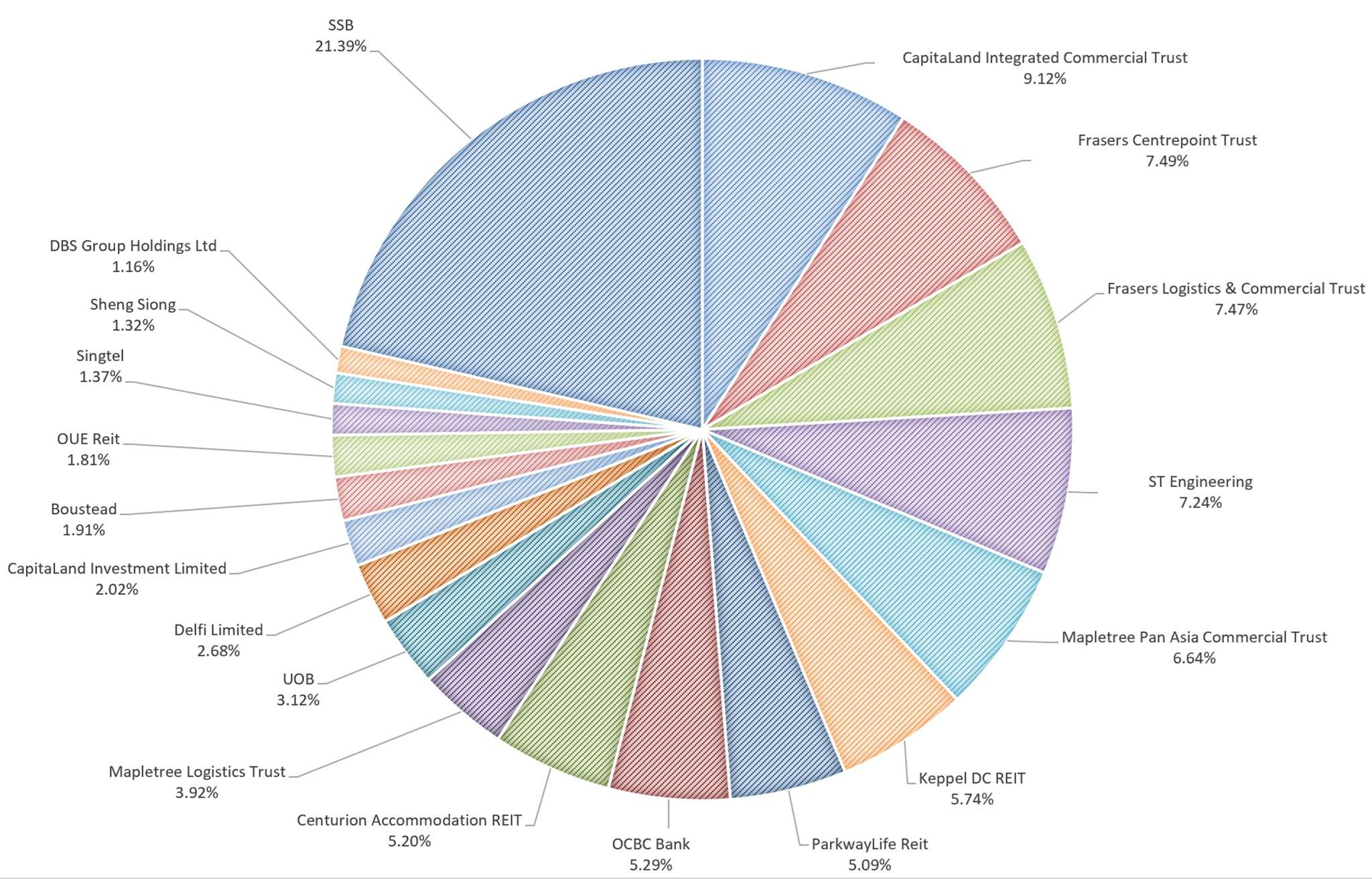
Above is my Singapore dividend stock portfolio. In 2025, I collected a total dividend of $20,289.89, mainly contributed from the dividend stocks above.
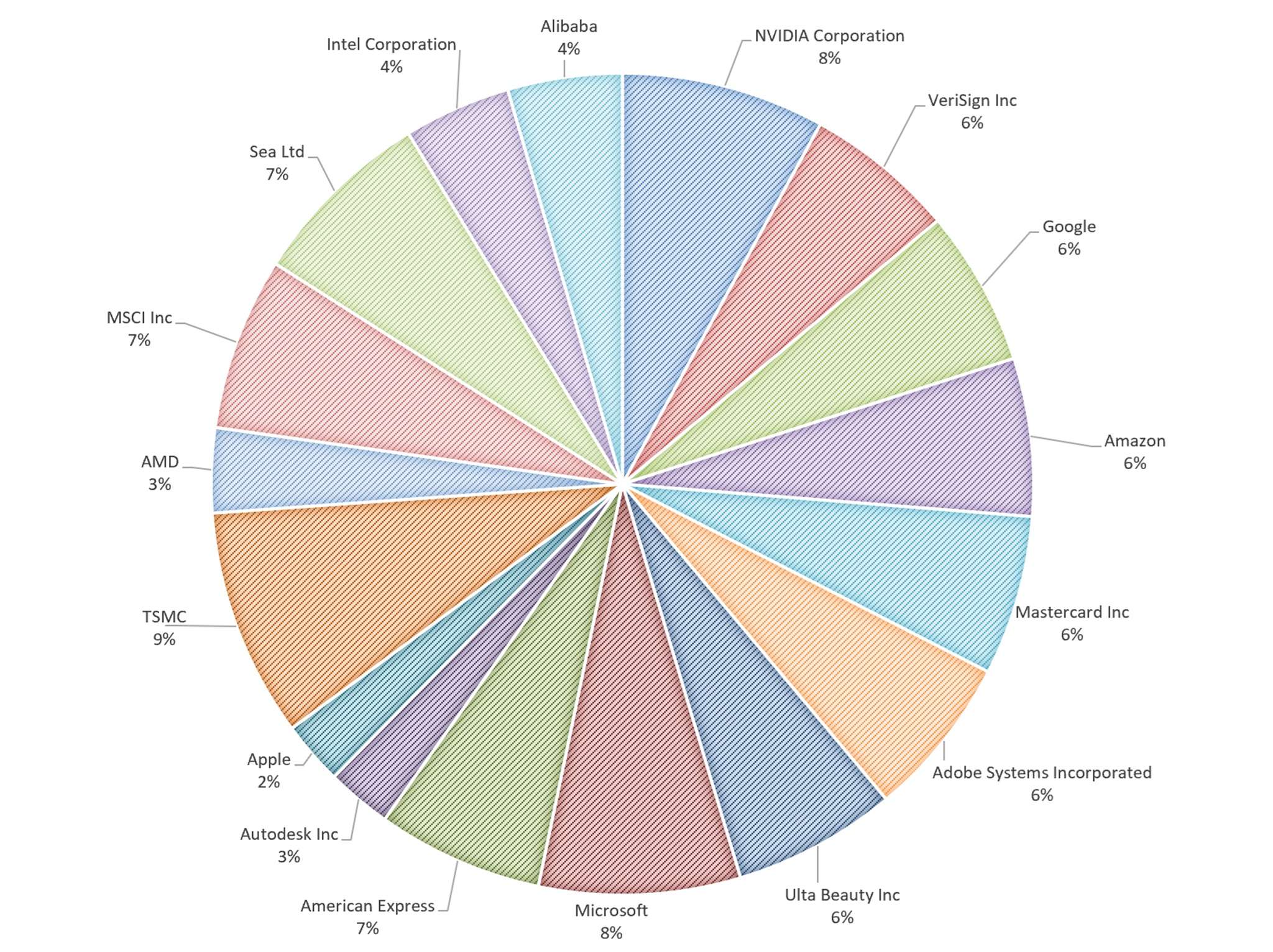
Despite multiple analysts reaffirming their buy rating on Sea Ltd, the share price of Sea Ltd continued to underperform, and its share price kept falling further.
Summary of Financial Goals Progress for January 2026
This month, I paid off almost S$10K of holiday expenses for the family trip in December 2025 which comprised of hotel bookings, food and shopping expenses. Despite the huge expenditure, the total of my financial assets continued to grow. This is contributed by the total value of my stock investments which grew substantially in early January, largely due to the rally of technology stocks.
Yesterday, there was a huge selloff on technology stocks on the US stock market as investors are worried over whether business spendings on artificial intelligence is overrated. There is a risk the total value of my financial assets will fall below its target but also an opportunity to jump onto the bandwagon during the dip.
That ends my update for January. See you again in February 2026!